
What role can the last remaining large wild bovine species in Europe play in the rewilding of Mediterranean ecosystems and the management of woody vegetation? How does the European bison adapt to the ecosystems of the Iberian Peninsula and the rest of Europe? A bison study led by Rewilding Spain in El Recuenco (Guadalajara), in collaboration with other European organisations and the local council, will provide some answers to these questions.
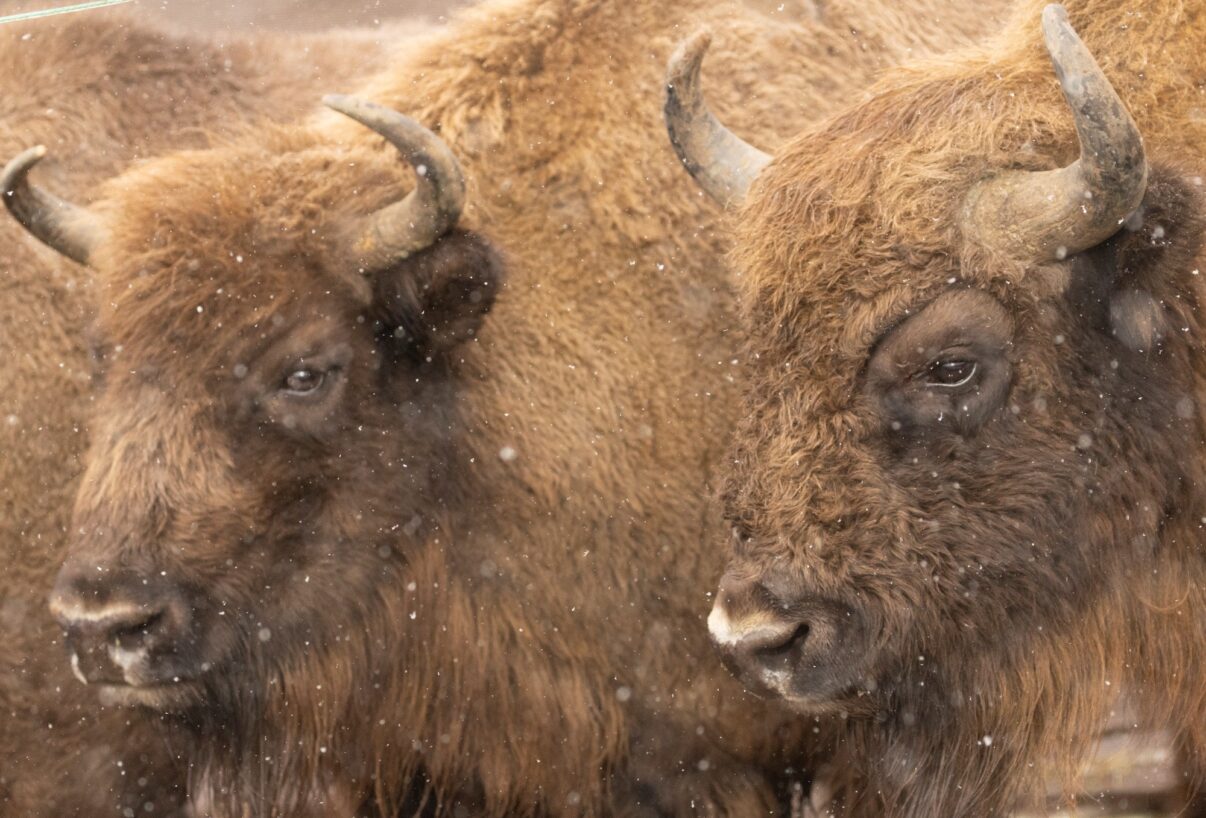
Nine European bison (Bison bonasus) that have arrived in the municipality of El Recuenco (Alto Tajo, Guadalajara) will provide new insights into these questions and help to better understand how the species can adapt to Mediterranean ecosystems and contribute to their restoration. These animals are part of a pioneering international research project launched by Rewilding Spain in collaboration with the University of the Basque Country, the University of Manchester (UK) and ECONOVO, a research centre specialising in ecological dynamics and affiliated with Aarhus University (Denmark).
Potential for wildfire prevention and addressing climate change
The European bison is the only large wild bovine species that has survived to the present day in Europe and is the continent’s largest terrestrial mammal. As such, it is a keystone species with enormous potential to transform landscapes. Gaining a better understanding of its ability to inhabit ecosystems such as those of the Iberian Highlands, and of its effects on vegetation, will enable better decision-making regarding the role this species can play in rewilding Europe, as well as in nature management approaches that lead to forests that are more resilient to wildfires and other impacts of climate change.
The El Recuenco bison herd consists of five females and four males and arrived from a private estate in El Espinar (Segovia). The adult animals have lived there in semi-freedom since arriving from Poland and the Netherlands three years ago, while the younger individuals were born on the estate. As a result, the herd is cohesive and well adapted to the conditions of the Spanish plateau.
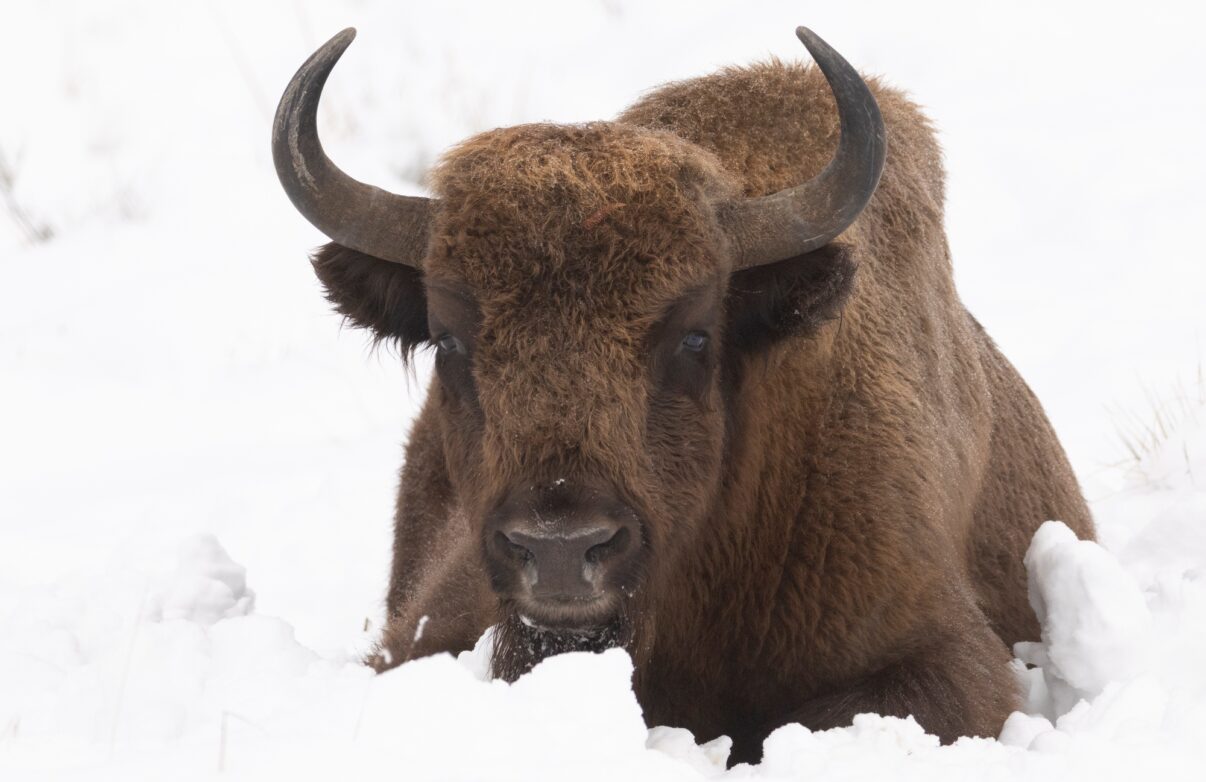
Following their arrival in El Recuenco, the bison will spend several weeks in an adaptation enclosure, during which their health and behaviour will be monitored. They will then live in semi-freedom within a 400-hectare area of publicly owned woodland belonging to the local council and enclosed by a perimeter fence. The herd is continuously geolocated using GPS devices, and two members of the Rewilding Spain team permanently monitor their movements and situation on the ground.
Comparative study with other bison populations in Europe
Through the analysis of hormones, immunoglobulins and metabarcoding in faecal samples, the study will assess bison stress levels throughout the year as well as the composition of their diet, which will be strictly natural, with no supplementary feeding. Thanks to collaboration with international organisations, including other members of the Rewilding Europe network, these analyses will be replicated in other bison populations across Europe — from Spain to Azerbaijan and Scandinavia, via the Netherlands, Poland and Romania. This will allow results to be compared and conclusions drawn about the species’ adaptation to different ecosystems and environmental conditions.
At the same time, a parallel study will gather information on the impact of bison on the composition and structure of woody vegetation, both in unmanaged woodland and in plots where thinning interventions were carried out prior to the bison’s arrival.
A request from El Recuenco Town Council
The launch of this initiative has been made possible thanks to the strong commitment of the El Recuenco Town Council and its residents. The municipality, home to just 80 inhabitants, considers its public woodland to be “the crown jewel” of the village, in the words of its mayor, Enrique Collada.
Aware of the importance of a keystone species such as the bison for rewilding, and of the work with large herbivores that Rewilding Spain is carrying out in other municipalities of the Iberian Highlands — where more than 20,000 hectares of natural grazing are currently managed — El Recuenco Town Council specifically requested to host bison in their woodland due to its potential positive impact on the village.
This proactive attitude on the part of the municipality marked the starting point for the creation of this research project, which has been developed through social consensus. The Town Council has enabled the use of grazing land and, over the past year, has coordinated dialogue with all local stakeholders and disseminated information among residents through talks, meetings and site visits.
In the last decades, this area has largely fallen into disuse due to the decline of many primary sector activities, including extensive livestock farming. Therefore, the natural land management provided by these large herbivores is expected to benefit the El Recuenco woodland by maintaining a more diverse and resilient landscape, while also opening opportunities for employment and ecotourism.
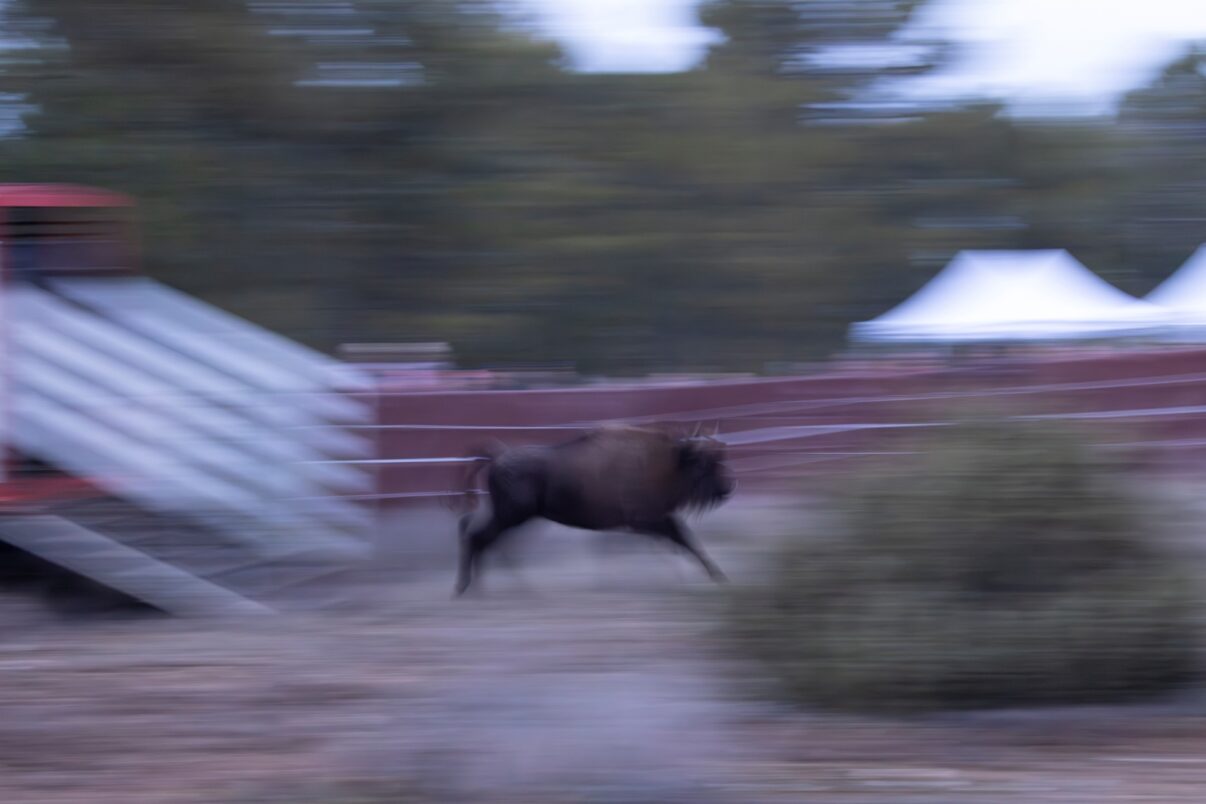
“The large herbivore project, and in particular the European bison, allows us to make progress on very important objectives for the municipality: firstly, forest management to prevent wildfires; secondly, doing so from a research project perspective, enabling us to analyse positive and negative impacts on the territory in a controlled way while creating high-quality jobs in this field; and thirdly, using a unique and iconic species to attract visitors and tourists to the village, thereby generating opportunities for socio-economic development,” explains Enrique Collada. He also hopes the initiative will be “an opportunity to improve the profitability of existing local businesses, such as accommodation, the bar or the village shop, as well as for new entrepreneurs.”
Bison grazing, compatible with other land uses
The use of grazing land by the bison, which begins now, will remain compatible with other land activities such as timber extraction, hunting and mushroom picking, as well as recreational use and wildlife observation by residents and nature enthusiasts. As such, this research project will generate income streams for the municipality.
In the current context of growing interest in rewilding as a strategy to address environmental challenges worldwide, the Rewilding Spain team leader in the Iberian Highlands, Pablo Schapira, highlights the importance of this study in “generating unprecedented research into the effective ecological range of the European bison and its restorative potential not only in ecosystems such as Mediterranean woodland, but across the entire European continent”. He also underlines the socio-economic value of the initiative in “providing development alternatives for rural areas and demonstrating that nature recovery can be pursued through social consensus and the participation of all stakeholders involved”.
Related news