
The Iberian Highlands have struggled with rural depopulation and economic decline for many years. Today, rewilding is helping communities in the landscape turn these challenges into new opportunities — creating jobs, supporting local businesses, and enabling nature to become a powerful driver of local prosperity.
“I love these horses, and I love that they are thriving here,” says Soraya, who began guiding visitors in 2024 to see the Przewalski’s horses living in Villanueva de Alcorón and the Serrano horses and the tauros herds living in Mazarete, through her nature-based tour company El Observario. “They are making nature here healthier and more resilient — by opening up the forest and creating natural firebreaks, for example. But more than this, their rewilding has given me an opportunity to settle and flourish here by supporting my business. I feel like I have grown together with this herd — these beautiful animals have given me a whole new perspective on life. For that, I’m incredibly thankful.”
Funding and training
El Observatorio is one of around thirty businesses and entrepreneurial initiatives that Rewilding Spain has supported since the launch of the Ierian Highlands rewilding initiative. This support has taken the form of funding, consultancy or the facilitation of resources, such as access to herds of large herbivores for guided visits.
Another key element of the support provided to the local business network and entrepreneurs is training and capacity building in areas relevant to their activities. This includes specific knowledge of the behaviour (ethology) of returning species, the biodiversity of the landscape, geology, tracking skills, and English training that enables them to cater for a growing number of international visitors.
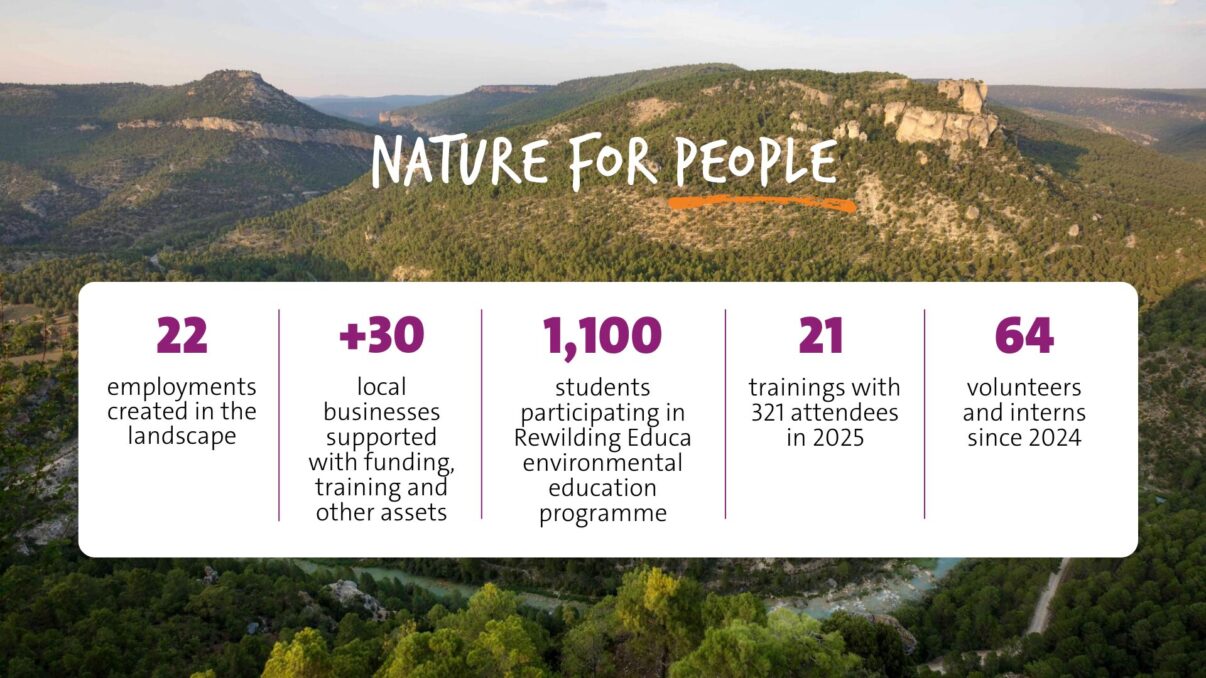
Connected with the roots and traditions in the area, a significant effort was also made to revive an almost lost trade that used to be a powerful driver for local economy: resin tapping. Seven people completed the course run by the Resin School created by Rewilding Spain in 2025 as part of the Bosque Innova project, with support from the Fundación Biodiversidad. The course provided participants with the skills needed to work as resin tappers and in other forestry-related activities. An opportunity for them to earn their livings and a way of promoting sustainable forest management and keeping forests in good condition.
Employment and life in rural villages
The first Przewalski’s horses arrived in the municipality of Villanueva de Alcorón in 2023 as part of Rewilding Spain’s rewilding initiative in the Southern Iberian System. Today, they have become a major attraction, drawing a growing number of nature lovers to this area of the Alto Tajo, where visitors have the unique opportunity to observe these animals living independently in the wild.
From the launch of the initiative in late 2022, it was clear that the rewilding of this vast territory — covering 850,000 hectares across the provinces of Cuenca, Guadalajara and Teruel — needed to serve both to restore nature and to revitalise local villages, creating opportunities for people to stay and even return to their hometowns.
“The only way for our rewilding efforts to be successful here is with the support of local communities,” explains Rewilding Spain team leader Pablo Schapira. “One of the best ways of generating that support is by demonstrating that rewilding can deliver socio-economic benefits — as well as ecological ones.”
Given the low population density of the Iberian Highlands and the lack of opportunities, every rewilding action carried out here can generate significant benefits for local communities. Each new herd of herbivores and each restored forest creates opportunities, from eco-tourism to support for local businesses. In this way, rewilding not only restores nature but also brings life back to communities across the landscape.
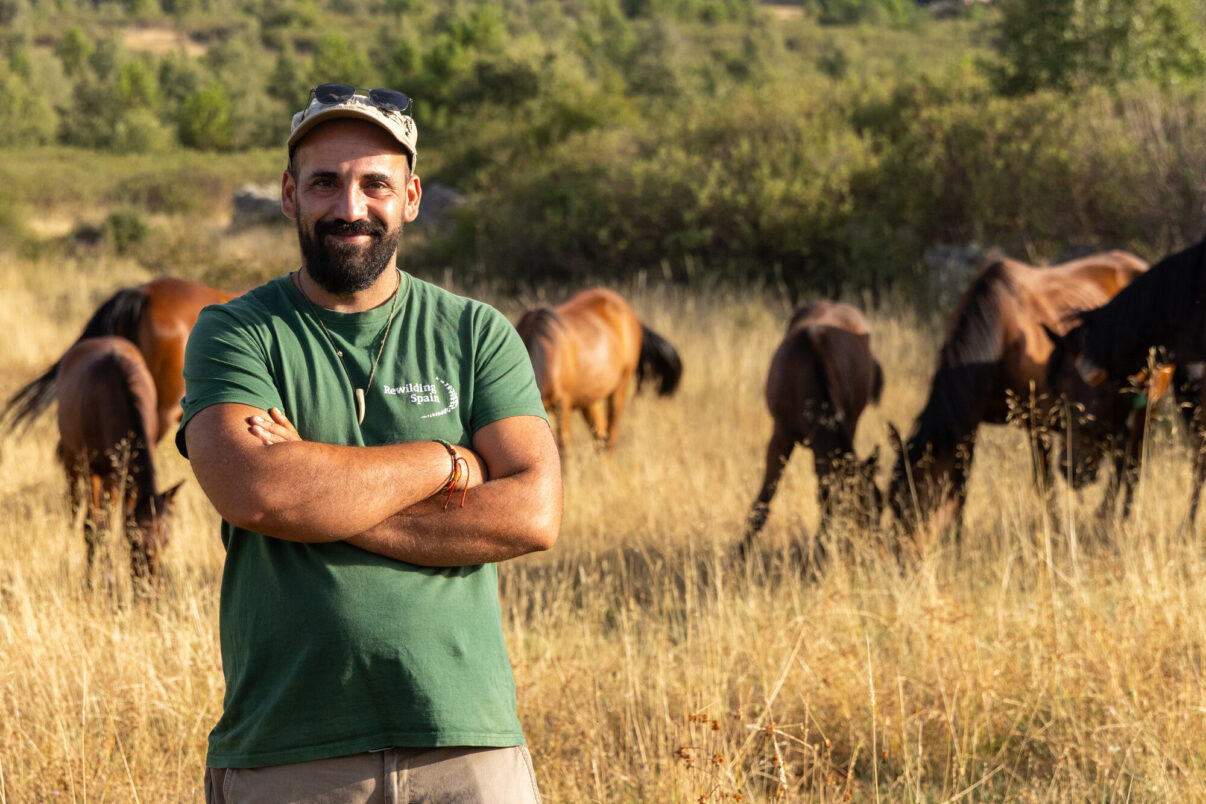
To date, Rewilding Spain has created 22 direct jobs. Most of these positions have been filled by people who were already living in the area, while others are held by people who have been able to return to their villages thanks to the initiative, as well as by colleagues who have moved to the area with their families.
“If we reintroduce some animals or support nature recovery in the landscape and this creates one or two jobs — either directly or through increased tourism – then maybe this will enable one or two families to return to a local village of 30 people,” says Pablo Schapira. “This can mean the difference between having a school or shop in that village open or closed.”
Volunteering and environmental education
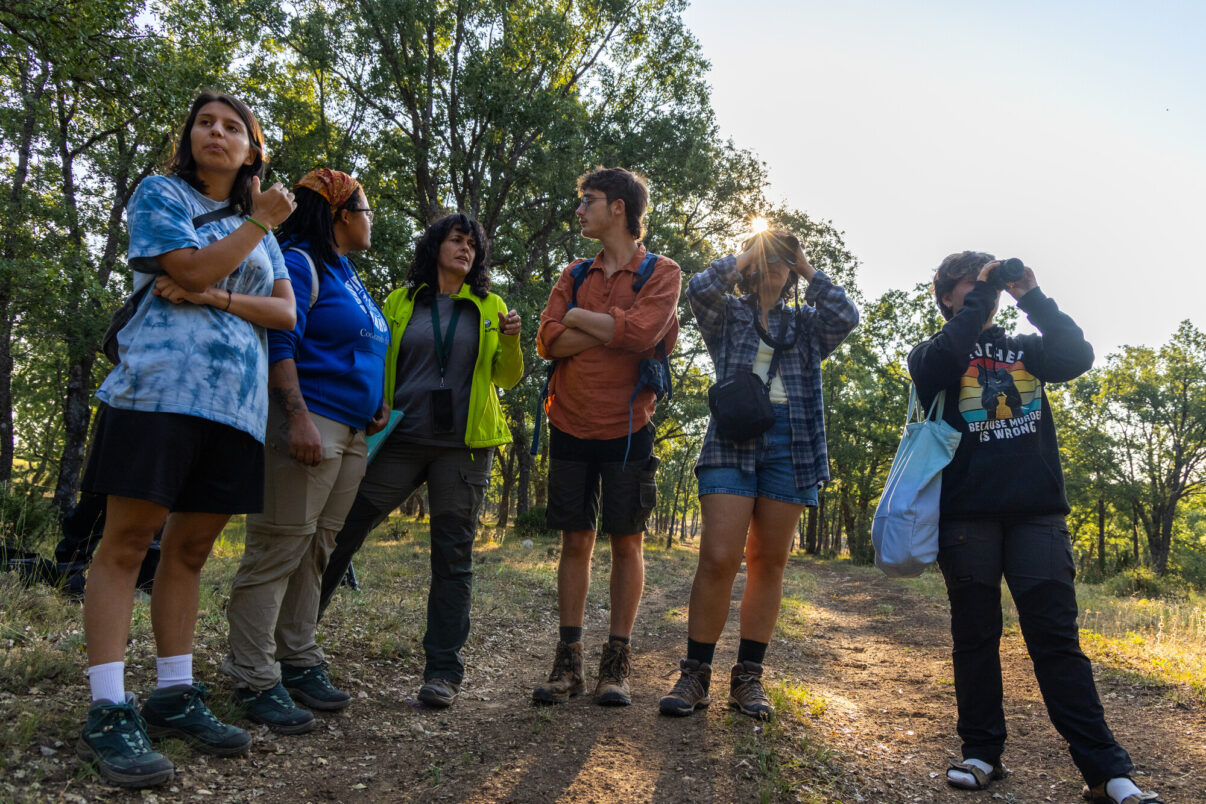
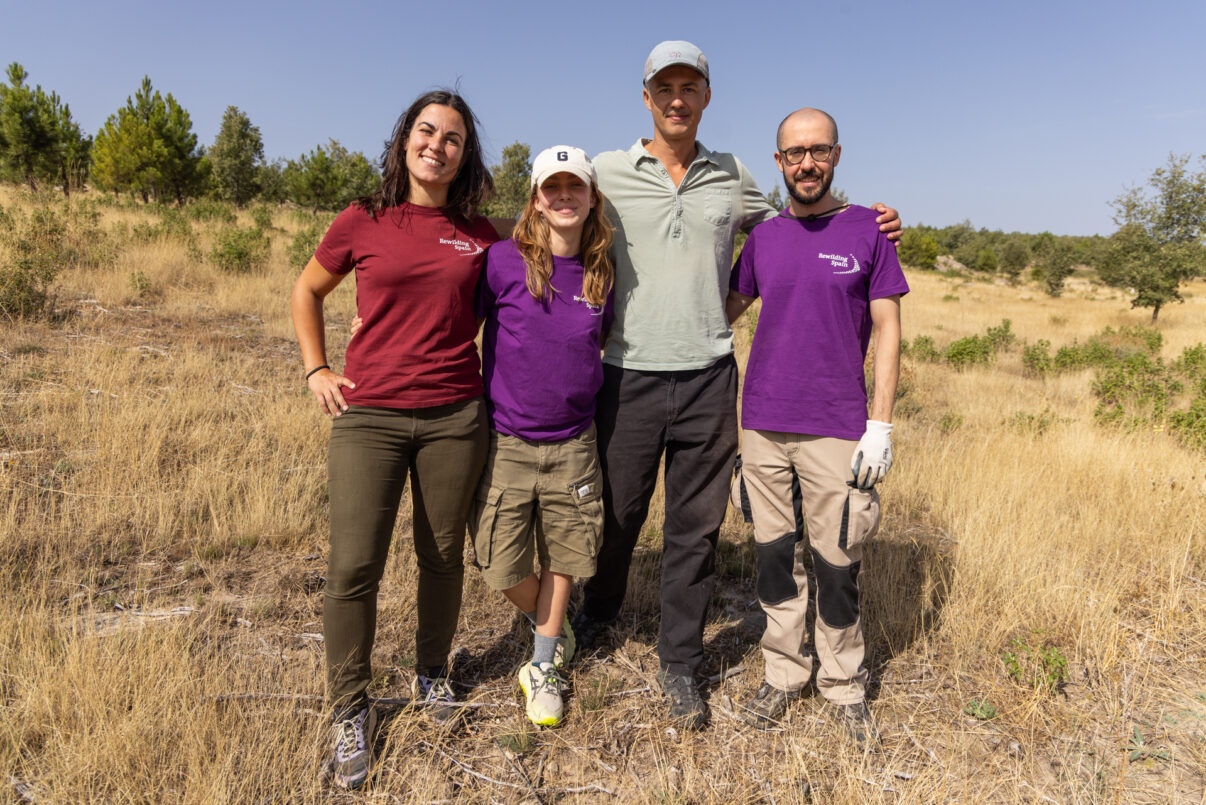
Rewilding Spain’s volunteering programme has involved 64 volunteers and students from different parts of Spain and from 18 other countries around the world since its launch in 2024 and it is also generating economic benefits for local communities. Rewilding Spain rents several homes in nearby villages to accommodate them and encourages spending in local businesses. In addition, these volunteers are becoming enthusiastic ambassadors for the territory in their places of origin, providing valuable positive visibility for the Iberian Highlands not only within Spain but far beyond its national borders.
Kids are key for the future of the planet. Connection between people and the natural resources of the Iberian Highlands is being strengthened through the Rewilding Educa environmental education programme, targeting primary and secondary school students. By combining classroom activities with innovative technological resources and field trips, more than 1,100 schoolchildren from the Alto Tajo, the Serranía de Cuenca and the Sierra de Albarracín regions have learned about the essential role of horses, tauros and vultures in keeping nature healthy.
All of these actions contribute to the same goal: enabling nature and people to thrive together. This is already happening in the Iberian Highlands and this landscape has the potential to become a model for the return of nature in other parts of Spain and across Europe.
Related news
- More than 750 schoolchildren learn about the essential role of vultures for nature
- Open call: grant programme to fund nature-based businesses and start-ups in the Iberian Highlands
- Calling all nature-based entrepreneurs: Rewilding Europe Capital open for more new loans