

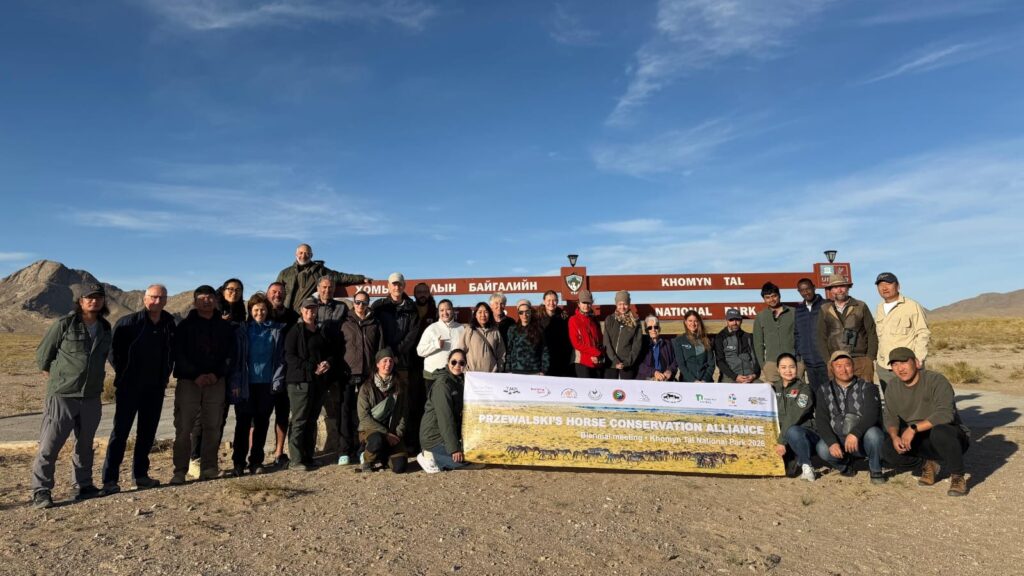
Rewilding Spain took part in the recent meeting of the Przewalski’s Horse Conservation Alliance (PHCA) in Mongolia. The PHCA is the leading organisation bringing together the world’s foremost experts on this iconic species and working to safeguard the world’s last remaining wild horse.
Coordinating efforts and sharing knowledge are key to the conservation of Przewalski’s horse. But this species also provides a direct connection to the essential ecological role that large herbivores such as horses have played in nature for millennia. Through their grazing and movements, wild horses have helped shape and maintain healthy, diverse landscapes that are better equipped to face today’s environmental challenges. Their conservation is therefore also highly important for rewilding.
The PHCA meeting brought together experts from 17 organisations across 11 countries at Khomyn Tal National Park in Mongolia, including equid specialists from the IUCN.
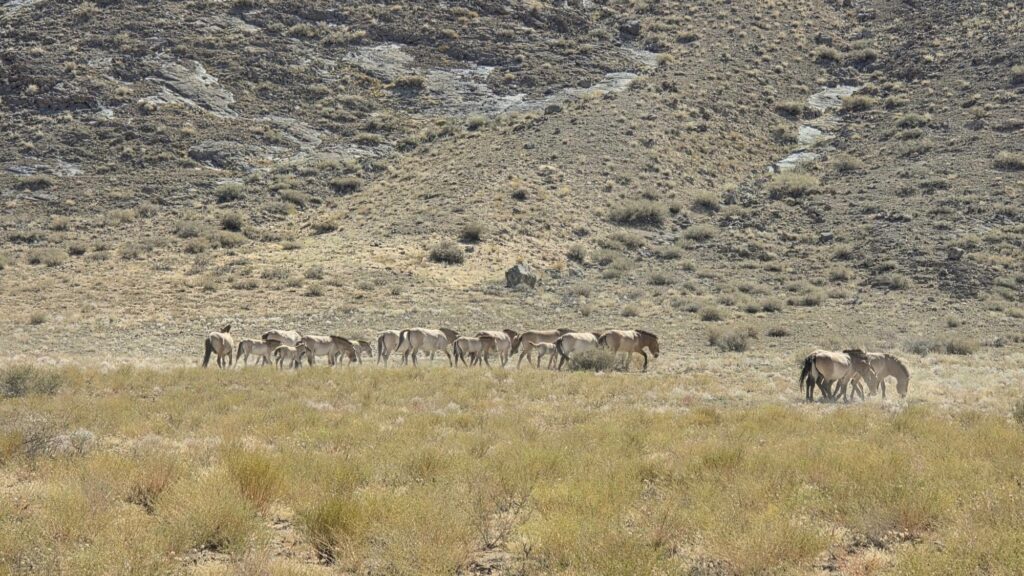
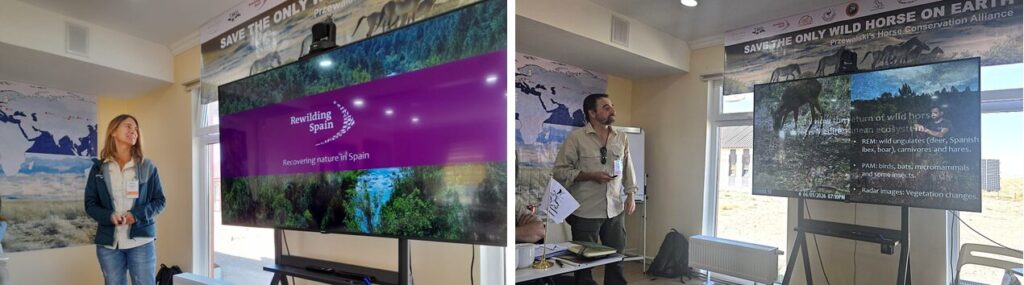
For the first time, the contribution being made to the species’ conservation in Spain was presented, thanks to the work of Rewilding Spain in the Iberian Highlands. Through our rewilding initiative, up to 39 Przewalski’s horses have now been brought to the area, which currently hosts the largest herd of the species in Spain.
Rewilding Spain General Manager Mara Zamora introduced the work and objectives of our foundation, while Monitoring Manager Diego Rodríguez explained the monitoring activities being carried out to gain a better understanding of the horses’ behaviour and adaptation.
Since the first horses arrived in 2023, the main herd in the area, which inhabits the dehesa of Villanueva de Alcorón (Alto Tajo, Guadalajara), has continued to grow year after year. This growth is the result both of the arrival of new individuals from different European reserves and of births recorded each spring – the clearest indication of the horses’ successful adaptation to the area.
Our experience in Spain added to the intensive exchange of knowledge that took place in Mongolia. The meeting provided an opportunity for everyone involved to share lessons learned, harmonise best management practices, coordinate genetic studies and address challenges shared by the species’ different reintroduction sites and reserves.
