

For the first time in decades, two cinereous vulture (Aegypius monachus) chicks have hatched in Alto Tajo Natural Park, marking a major milestone in the recovery of one of Europe’s largest and most ecologically important birds of prey.
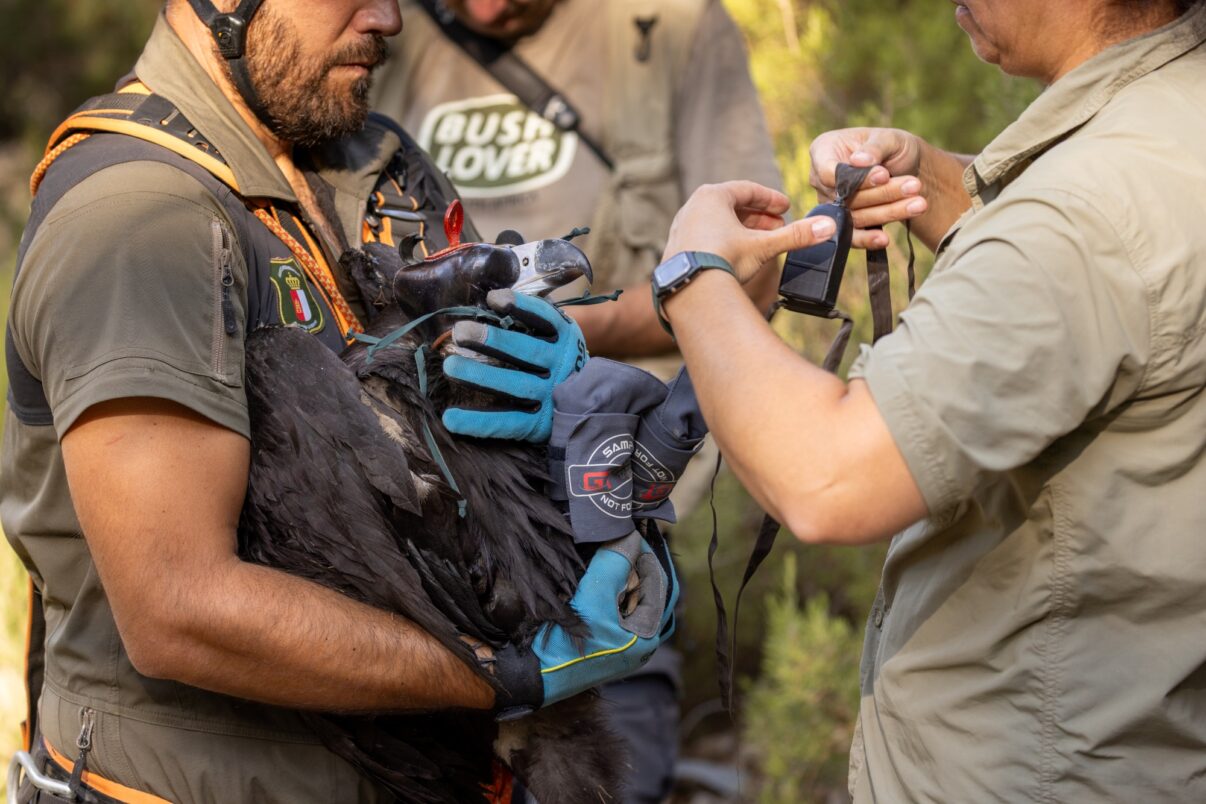
The two chicks were born to two of the five breeding cinereous vulture pairs that settled in Alto Tajo this spring following their release — the first resident pairs recorded in the region for at least 100 years. While one chick died a few days after hatching, the surviving youngster is developing well and has been fitted with a GPS transmitter that will enable the Rewilding Spain team and partners to monitor its movements after fledging.
Five years after the first releases under the Cinereous Vulture Reintroduction Programme in Alto Tajo and the Serranía de Cuenca – which has so far released 37 birds – these hatchlings represent the programme’s most significant milestone to date. They fulfil their primary objective: restoring a permanent breeding population of cinereous vultures to a landscape where the species once thrived but disappeared around a century ago following the degradation of its forest habitat.
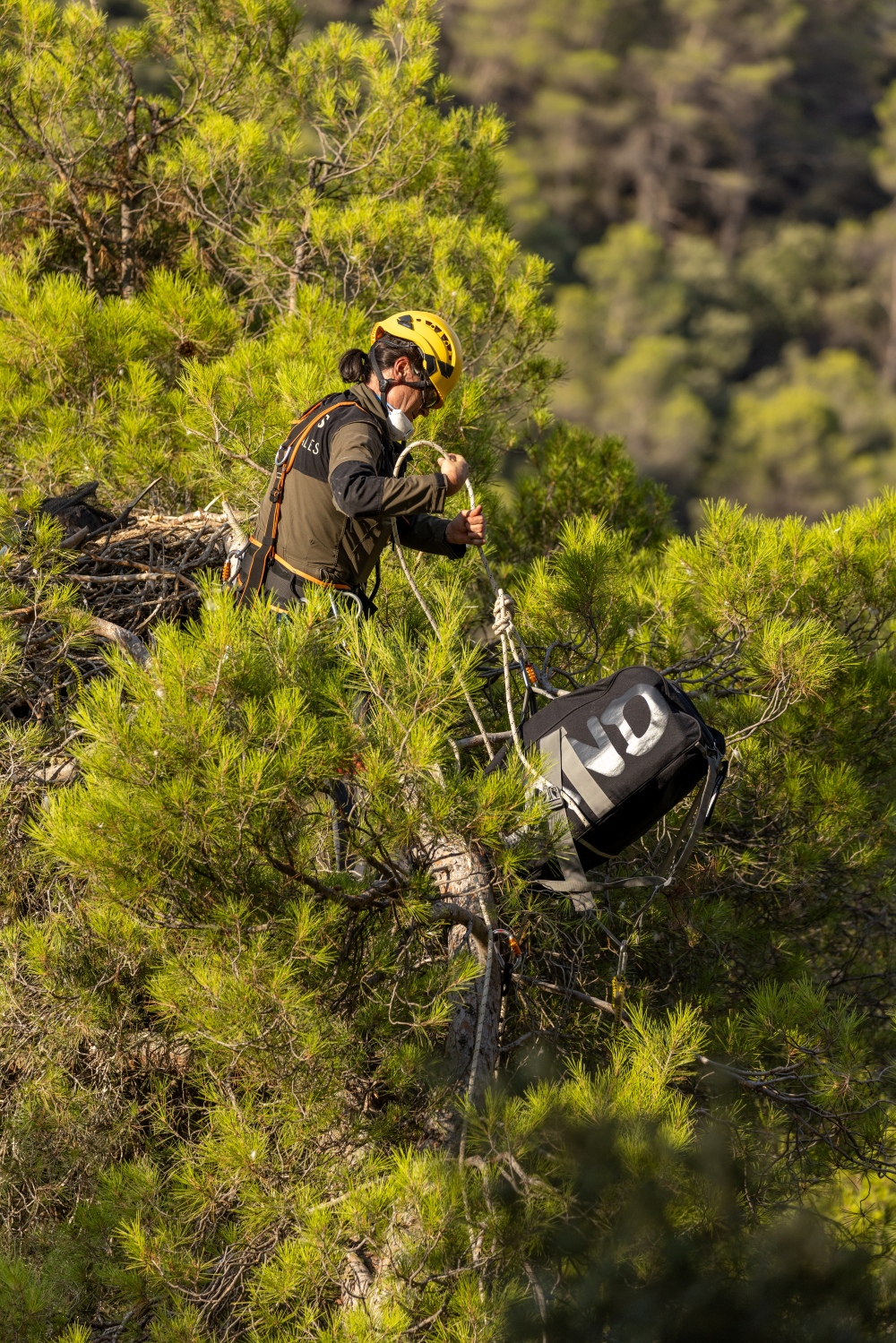
The programme is led by the Regional Government of Castilla-La Mancha through its Department of Sustainable Development and Alto Tajo Natural Park, and is implemented on the ground by Rewilding Spain and Terra Naturalis Association. Launched in 2020, the initiative combines carefully managed releases with a network of 21 artificial nesting platforms built in trees, six supplementary feeding stations and an acclimatisation aviary. Vultures arriving from Castilla-La Mancha’s wildlife rehabilitation centres spend several months in this aviary adapting to what is expected to become their new home after being released.
Restoring nature’s clean-up crew
The black vulture is the largest scavenger bird found in Spain. The emergence of a new generation of cinereous vultures born in the wild is not only a landmark for biodiversity in the Iberian Highlands, but also strengthens a vital ecological process that helps maintain healthy ecosystems: carrion removal and nutrient recycling. Scavenging birds such as the cinereous vulture play an essential role by feeding on carcasses, helping to prevent the spread of disease while returning nutrients to the soil and effectively acting as nature’s sanitation service.
One of the successful breeding pairs settled this spring on one of the 21 artificial nesting platforms installed as part of the reintroduction programme, while the other built its own nest naturally. Three additional pairs also occupied artificial nests this season, although none laid eggs this year.
Cinereous vultures breed in loose colonies, with nests built in large trees that may be separated by anything from a few dozen metres to several kilometres. According to Jorge Layna, Terra Naturalis’ technical coordinator for the project, “the extensive forests of Alto Tajo and the Serranía de Cuenca have the capacity to support a large number of nests, meaning the area has the potential to become an important breeding stronghold for this threatened species in the future.”
Beyond the symbolic significance of these first chicks after a century of absence, the establishment of the first breeding pairs represents an even more important step for the future. Cinereous vultures tend to breed close to where they were born and, once paired, generally remain in the same territory for life. The expectation is that these two pairs and their offspring will continue to inhabit Alto Tajo, forming the nucleus of what could become a stable new colony. Such a population would not only strengthen the ecological role of scavenging birds by increasing species diversity within the guild, but would also contribute to the conservation of a species classified as Vulnerable in Spain, where around 3,000 breeding pairs are currently recorded.
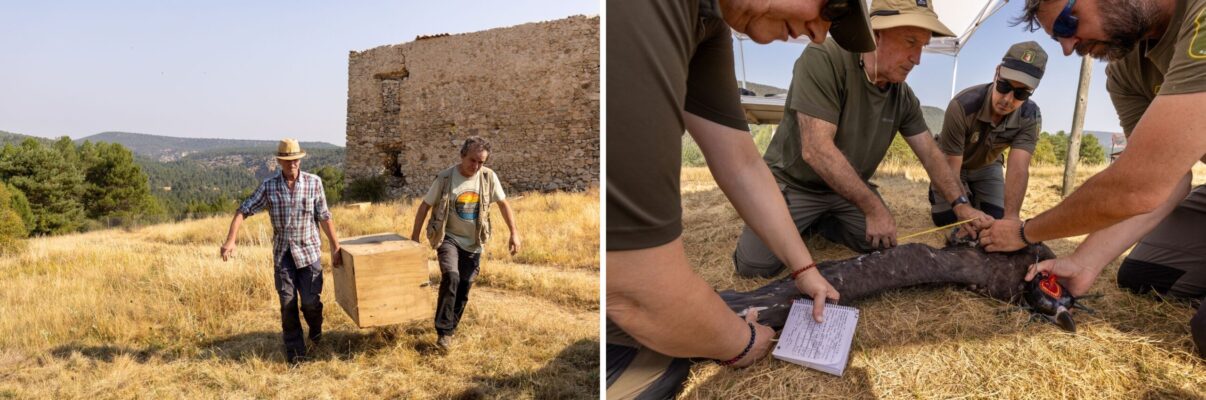
The hatching of these chicks marks a major achievement for the reintroduction programme. It has been made possible through sustained institutional support, collaboration between specialist organisations and the application of a rigorous adaptation and scientific monitoring protocol, including the continuous GPS tracking of released birds.
A new release next autumn
The work, however, is far from over. A further 13 cinereous vultures are currently undergoing acclimatisation at the programme’s facilities in Peralejos de las Truchas and are due to be released this autumn, further boosting the establishment of the species in the region.
The Iberian Highlands already supports healthy populations of griffon vultures (Gyps fulvus) and Egyptian vultures (Neophron percnopterus). With cinereous vultures now breeding successfully here, the landscape is a step closer to once again host all four of Spain’s native vulture species, with plans underway to reintroduce bearded vultures (Gypaetus barbatus) here too.
Pablo Schapira, Rewilding Spain’s team leader in the Iberian Highlands, highlighted the wider significance of the achievement: “We are now closer to restoring a complete scavenger community in this landscape, with all four species of large scavenging birds native to the Iberian Peninsula. This will strengthen an essential ecological process within the food web. At the same time, having cinereous vultures breeding here adds a new attraction for wildlife watchers, making it positive news not only for nature conservation but also for local socio-economic development.”
Related news
- Cinereous vulture reintroduction in the Iberian Highlands take a major step forward
- Five new artificial nests to favour the cinereous vulture settlement in the Iberian Highlands
- Cinereous vulture comeback in the Iberian Highlands takes another step forward

